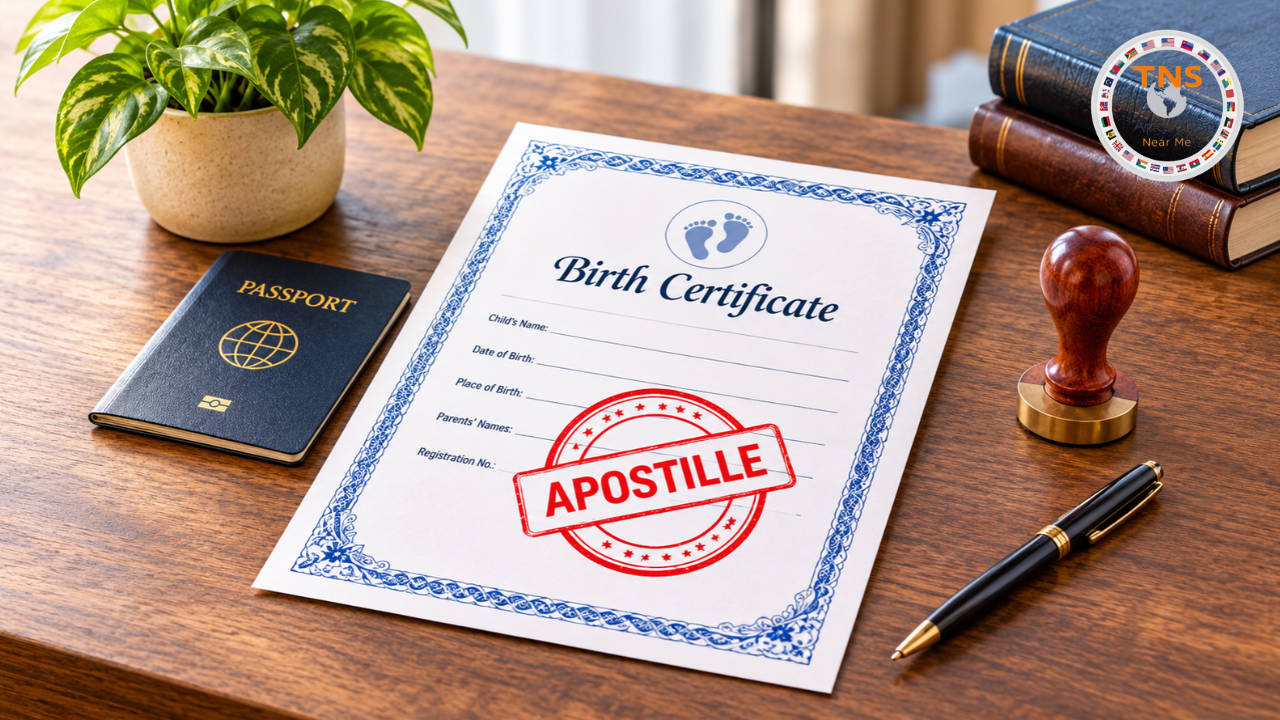
Using a U.S. birth certificate in another country is rarely as simple as handing over a copy you have at home. Depending on where it needs to go, local authorities might ask for an apostille birth certificate, official authentication, or full legalization. People often mix these terms up, but they actually mean three different legal paths. Knowing which one you need can save time and help you avoid filing paperwork through the wrong state office.
What Is an Apostille?
An apostille is a specific certificate used to authenticate a public document for use in another country that is a party to the Hague Apostille Convention.
When a document qualifies, an apostille provides a standardized form of certification that can avoid the traditional multi-step legalization process. It provides the receiving authority with a standardized way to verify the document.
A birth certificate may need an apostille for purposes such as::
- Getting married abroad
- Applying for foreign residency or visas
- Sorting out dual citizenship
- Handling an international adoption
- Enrolling in a foreign university
- Dealing with overseas legal or court matters
Keep in mind that rules aren’t identical everywhere. The state that issued your certificate and the country receiving it can both affect the requirements.
What Is Authentication?
Authentication is the official process of verifying the signature, seal, or authority on a public document.
Authentication may be required when a document is being prepared for a country that does not use the Hague Apostille system, depending on the applicable requirements.
For a U.S. birth certificate, the appropriate office to contact can depend on where the birth was registered and what the foreign government requires. This is particularly important for vital records apostille requests, mainly because a birth record issued in New York won’t follow the same state steps as one from Texas.
What Is Legalization
Legalization is generally used for documents destined for countries outside the Hague Apostille Convention framework.
Unlike an apostille, legalization can involve multiple administrative steps before a document can be submitted for use abroad.
Depending on the destination, the sequence often looks like this:
- Ordering the right certified copy from the vital statistics office.
- Getting that document authenticated by state or federal authorities.
- Completing any extra government certifications required along the way.
- Submitting the paperwork directly to the destination country’s embassy or consulate.
- Meeting any additional requirements set by the foreign agency receiving it.
The exact steps can depend on the receiving country and the specific document you are holding.
Apostille vs. Authentication vs. Legalization
Although these three words sound like they do the same thing, the real difference is the legal framework your destination country recognizes.
Apostille
An apostille applies when:
- The destination country is part of the Hague Convention.
- Your specific document qualifies for it.
- The receiving office requires an apostille.
It provides a standardized certification without the traditional embassy legalization process.
Authentication
Authentication is used to verify the signature, seal, or authority associated with a document. It may be part of the process for documents being prepared for countries outside the Hague Apostille Convention framework.
Legalization
Legalization is generally used for documents destined for countries outside the Hague Apostille Convention framework.
What Does a Birth Certificate Need?
If your goal is getting an apostille birth certificate, start by checking if you hold the right version of the document.
A receiving authority may require an official, state-issued certified copy rather than a basic photocopy. Some offices may also have specific requirements concerning the certificate’s date of issue, format, or certification.
A certified copy for apostille is an official copy issued or certified by the appropriate records authority. Just having a paper copy in a folder doesn’t mean it’s ready for processing.
The birth certificate apostille process can depend on a few key details:
- Which state issued the birth certificate
- What type of certificate you currently have
- Which country will receive the document
- Whether that country uses the Hague Apostille Convention
- Any special rules requested by the office asking for it
How Do You Know Which Peocess You Need?
Start by checking the country you are sending the document to.
If the destination country is part of the Hague Apostille Convention, an apostille may be the applicable certification, subject to the requirements for your specific document.
If you find yourself searching for secretary of state birth certificate authentication, you may be looking for the state authority responsible for certifying or authenticating the document. Because requirements vary, follow the specific procedures of the state that issued the certificate.
If you aren’t sure which path may apply to your document, TNS Apostille can help you understand the certification process and the requirements to consider.
Final Thoughts Before You Submit Your Birth Certificate
Checking a few basic details upfront can help prevent delays later.
Make sure you confirm:
- The destination country
- Why you need the document
- Whether you need an apostille or full legalization
- If you hold an official certified copy
- Which state authority handles the seal
- Any extra rules from the foreign office receiving it
Understanding the distinction between an apostille, authentication, and legalization gives you a clear starting point. If you are currently figuring out how to apostille a birth certificate, checking your issuing state’s rules alongside the destination country’s requirements is the best place to start.
If you need an apostilled birth certificate for international use, TNS Apostille can assist with the document-certification process and help you understand the requirements and steps involved.