What An Apostille Actually Is (Hague Convention, 1961)
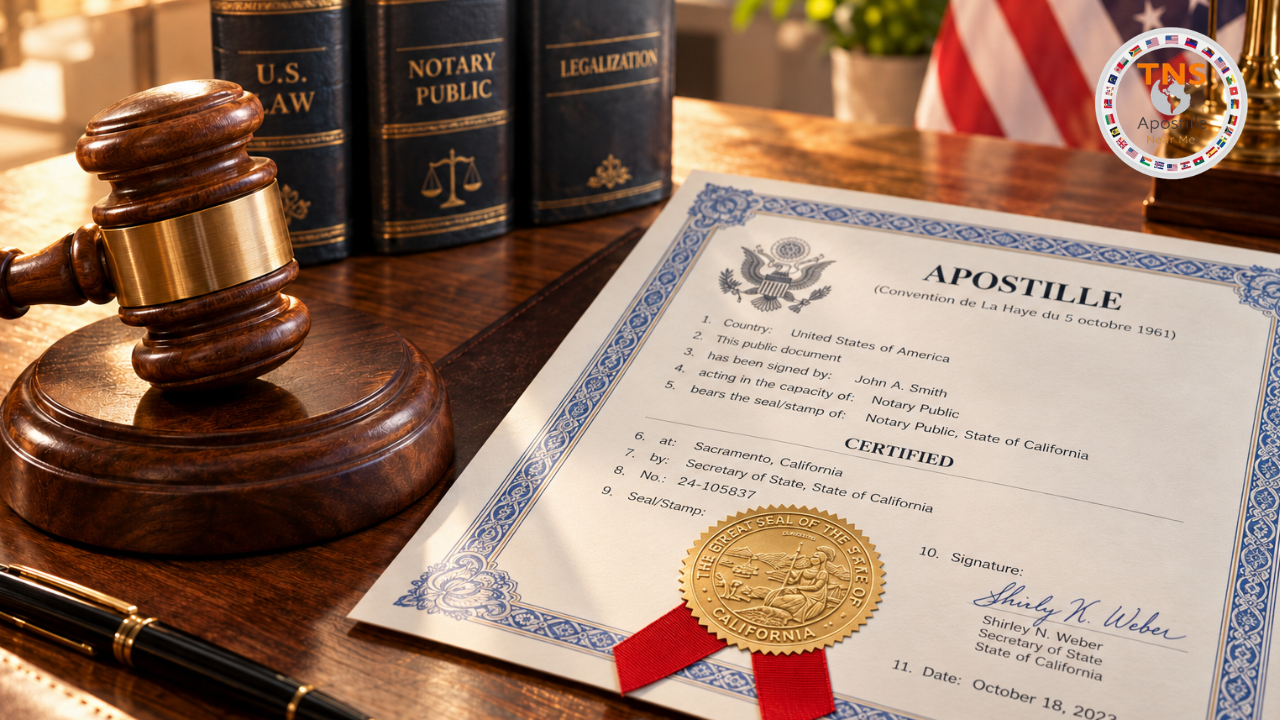
An apostille is a certificate used to authenticate a public document for use in another country that participates in the 1961 Hague Apostille Convention. The Convention was created to simplify the process by eliminating the need for traditional diplomatic or consular legalization between participating countries.
In practical terms, an apostille authenticates the signature on the document, the capacity in which the signer acted, and, where applicable, the identity of the seal or stamp on the document. It does not certify the contents of the document.
The Hague apostille meaning is therefore more specific than simply saying a document has been “approved.” An apostille confirms the authenticity of the document’s signature, the capacity in which the signer acted, and the applicable seal or stamp, but it does not validate the information contained in the document.
Common documents that may require an apostille include:
- Birth and marriage certificates
- Divorce decrees
- Death certificates
- Diplomas and transcripts
- Powers of attorney
- Court documents
- Corporate records
- Certain federal records
The exact issuing authority depends on the document. State-issued documents generally go through the appropriate state authority for certification or apostille, while certain federal documents are handled through the U.S. Department of State.
One important point: notarization is not the same as an apostille. A notary may witness a signature or perform another authorized notarial act. An apostille is a separate certificate issued by the designated competent authority.
When Is An Apostille The Appropriate Route?
The destination country is the first thing to check when determining whether an apostille may be appropriate. If the country participates in the Hague Apostille Convention, an apostille may replace the traditional legalization chain.
That does not mean every document follows an identical process. The issuing authority, document type, certified-copy requirements, translations, and instructions from the receiving organization can affect what must be completed before submission.
For example, federal documents intended for use in Hague Convention countries may require an apostille certificate from the U.S. Department of State. State documents follow the certification and apostille requirements of the state that issued them.
What “Authentication” Means For Non-Hague Countries
Authentication generally applies when a document is intended for a country outside the 1961 Hague Apostille Convention. The U.S. Department of State uses authentication certificates for these destinations. An authentication certificate acknowledges the relevant signature and seal of the official; it does not verify the contents of the document.
For U.S. state documents used in non-Hague countries, the document generally must first be authenticated by the state that issued it before it is submitted for federal authentication, when required. Federal documents follow a different path through the appropriate federal authority.
This is where authentication and notarization services may become relevant. Some documents require notarization or another form of certification as part of their preparation. However, notarization alone does not make a document ready for international use.
Before starting, check:
- The country where the document will be submitted
- The authority requesting it
- The type and origin of the document
- Whether an original or certified copy is required
- Whether notarization is required
- Whether a certified translation is necessary
- Whether additional embassy or consular certification is required
These details can change the route and the number of steps involved.
What Embassy / Consular Legalization Adds On Top
For countries outside the Hague Apostille Convention, the destination country may require additional legalization through its embassy or consulate after the applicable U.S. authentication steps. The exact requirements depend on the destination country and document.
This is commonly called document legalization or embassy legalization. Instead of using one apostille certificate as the final international authentication step, the document moves through the applicable chain of certifications.
The practical difference is that an apostille generally serves as the final authentication certificate under the Hague Convention, while documents for non-Hague destinations may require additional certification stages. Depending on the destination country’s rules, those stages can include authentication by U.S. authorities and legalization by the destination country’s embassy or consulate.
A common process may look like this:
Document → Authentication by the appropriate U.S. authority → Embassy or consulate legalization, if required
The actual sequence can vary according to the document and destination country, so the receiving authority’s instructions should be checked before submission.
The embassy legalization process exists because a non-Hague destination may require its own diplomatic or consular authority to recognize the certifications placed on a foreign document.
This is also why US legalization services can involve several separate stages rather than a single certificate. A provider may assist with document preparation, authentication, submission to the appropriate authority, and embassy or consular processing, depending on the requested service.
The U.S. Department of State notes that its authentication certificates are used for countries that are not parties to the 1961 Hague Convention.
Side-By-Side Comparison
Process | Generally Used For | Main Purpose | May Involve Embassy/Consulate? |
Apostille | Hague Convention countries | Authenticates qualifying signatures, seals, and official capacity under the Hague system | Generally no traditional legalization |
Authentication | Documents for countries outside the Hague Convention | Authenticates the relevant signature or seal of the official | May be followed by additional legalization |
Legalization | Destinations that require additional diplomatic or consular certification | Provides the additional certification required by the destination country | Yes, where required |
Notarization | Documents requiring a notarial act | A notary performs or certifies the applicable notarial act | Not by itself |
The table shows why choosing the route based only on the word “authentication” can be misleading. The same U.S. document may pass through different authorities depending on where it will be used. The destination country and document type therefore need to be identified before deciding which certification process applies.
For U.S. documents, the U.S. Department of State specifically identifies apostille certificates for Hague Convention countries and authentication certificates for countries outside the Convention.
Quick Decision Tree — Identify Your Certification Route
Use this as a starting point, not as a substitute for the receiving authority’s instructions:
1.Where will the document be used?
→ Hague Convention country?
Start by checking the apostille requirements.
→ Non-Hague country?
Check the authentication and legalization requirements.
2.What type of document do you have?
→ State-issued document?
Check the certification, apostille, or authentication requirements of the state that issued the document.
→ Federal document?
Check the U.S. Department of State’s requirements for federal apostille or authentication certificates.
→ Notarized document?
Check whether the relevant state authority requires additional certification of the notary’s signature before the document can be apostilled or authenticated.
3.Does the receiving authority require more?
→ Translation? Obtain the required translation in the specified format.
→ Embassy or consular certification? Continue with the applicable legalization process.
→ Additional certification? Complete that step before submission.
The best starting point is the country of intended use and the instructions provided by the organization receiving the document.
5 Common Reasons Documents Are Rejected
Choosing the correct certification route is only the first step. Documents can also be rejected when the copy, preliminary certification, translation, or receiving authority’s requirements do not match what was submitted.
1.The Wrong Certification Route
An apostille is not the correct certification route for every destination country. Using an apostille when the destination requires authentication and additional legalization may result in the document being rejected or returned.
2.An Unacceptable Copy
Some authorities require an original or certified copy rather than an ordinary photocopy or scan. The U.S. Department of State, for example, specifies original or certified-copy requirements for certain federal authentication and apostille requests.
3.Missing Pre-Certification
Certain documents need an earlier certification before they reach the final authentication authority. The exact requirement can depend on the issuing state, document type, and signature involved.
Skipping a required preliminary step can prevent the document from being processed.
4.Translation Requirements Are Overlooked
A receiving country or institution may require a document to be translated. The format, translator qualifications, notarization, and whether the translation itself needs authentication can vary.
The U.S. Department of State notes that some destinations require a professional translation of documents written in English.
5.The Receiving Authority’s Requirements Were Not Checked
A document can be correctly authenticated and still fail to meet the requirements of the organization receiving it.
Before sending anything, confirm:
- Which documents are required
- Whether originals or certified copies are accepted
- Whether there is a document-age limit
- Whether translation is required
- Which authentication or legalization route applies
- Whether additional embassy or consular certification is necessary
Requirements can differ even when two people are submitting similar documents for different purposes.
FAQ's
1.Is an apostille the same as legalization?
No. An apostille is a certificate used under the Hague Apostille Convention, while legalization can involve additional authentication and embassy or consular steps for countries outside that system. The applicable process depends on the destination country and document.
2.What is the difference between authentication and an apostille?
Both authenticate relevant signatures, seals, or official capacities, but they are used under different international frameworks. The U.S. Department of State identifies apostilles for Hague Convention countries and authentication certificates for countries that are not parties to the Convention.
3.What does the Hague apostille mean for my document?
The Hague apostille indicates that the document has received the certificate prescribed by the 1961 Hague Convention for use in another participating country. It does not certify the contents of the underlying document.
4.Do I need authentication before an apostille?
Not necessarily. The required preparation depends on the document, issuing authority, and destination country. State and federal documents can follow different certification and apostille procedures, so check the requirements for the specific document before submitting it.
5.What is the consular legalization USA process?
For documents intended for countries that require traditional legalization, the process may include authentication by the relevant U.S. authorities followed by certification through the destination country’s embassy or consulate. The exact sequence varies by country and document.
6.Can a notary replace an apostille?
No. Notarization and apostille certification serve different purposes. A notary may perform a required notarial act, while an apostille is issued by the designated competent authority for documents being used under the Hague Convention framework.
7.Can TNS Apostille help with non-Hague documents?
TNS Apostille can assist with U.S. legalization matters and document preparation for international submission. The specific assistance available depends on the document, destination country, and service requested.
8.How do I know whether I need an apostille or legalization?
Start with the destination country, then identify the document type, issuing authority, and receiving organization. If the destination is covered by the Hague Apostille Convention, check the apostille requirements. If it is outside the Convention, check the applicable authentication and legalization requirements.
Understanding apostille vs legalization before submitting your documents can help you identify the correct certification path and avoid preventable processing issues. If you are unsure which route applies, TNS Apostille can help you understand the requirements based on the destination, document type, and intended use.